
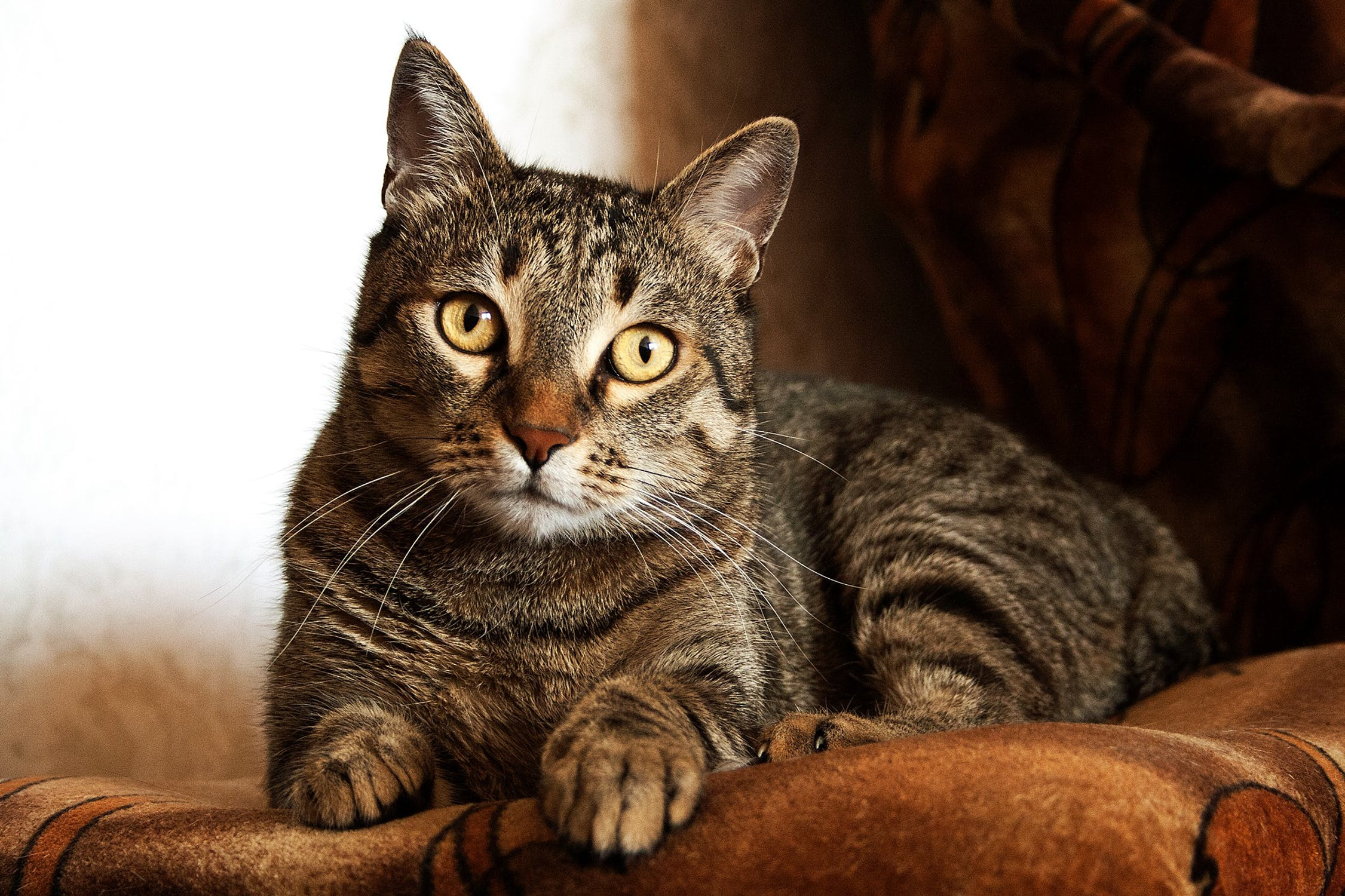
 Although cats are independent, they require a lot of love and daily care that consists of:
- Feeding
- Exercise and mental stimulation
- Grooming
- Trips to the litter box
In this lesson we'll break down each component of daily care and best position your cat to set-up a comfortable daily routine:
Feeding
Your cat should always have fresh water and be fed a diet of dry cat food, unless otherwise specified by your vet. We recommend Natural Balance and feeding your cat once or twice daily; the amount of food will be based on the age and weight of your cat. If you are unsure, consult your vet.
Trips to the litter box
We recommend using an uncovered litter box and placing it in a quiet, low-traffic area that is easily accessible for your cat. To help your cat maintain healthy habits, scoop out the litter box at least once daily and give it a deep clean every two weeks.
If your cat has an accident, don’t discipline or punish them. Doing so could result in your cat being fearful of you. Besides, you can clean up an accident relative easily with an enzymatic cleaner like Anti-Icky Poo, or you can make your own cleaner with the following ingredients:
- 1 cup hydrogen peroxide
- 1 tsp baking soda
- 1 drop dish non-concentrated dish soap mix
If you choose to make your own cleaner, first soak up the excess urine and then apply the mixture to the soiled area and soak thoroughly. Let the area air dry and repeat as needed for tough odds.
Grooming
A clean and well-groomed cat is a happy cat. Cats don’t generally like being bathed, so we don't recommend giving your cat a bath, but brushing can be an enjoyable activity to explore with your cat.
Mental stimulation and exercise
Because play time provides stimulation, encourages socialization and releases excess energy, provide your cat with at least one or two play sessions per day. Try a variety of toys (balls, squeaky toys, feather toys) or give your cat a good old fashion cardboard box with holes cut in the sides.
Don’t leave your cat alone with any toys that could be easily ingested or cause harm to your cat. Examples are string toys, yarn and Da Bird (feathers dangling from a string and wand).
Changes in behavior
If you see changes in your cat's eating, grooming, litter box or exercise patterns, this could be a signal that something is medically wrong and you should contact your vet.